
Radiation Cpm Chart
Radiation Cpm Chart - Web what are normal radiation levels cpm and what are dangerous ones? Web a geiger counter produces a “tick” or click when significant radiation is observed. Web radnet has 140 radiation air monitors in 50 states and runs 24 hours a day, 7 days a week. Web international system of units (si) unit and common unit terminology. Web radioactivity cpm conversion tool using the radioactivity cpm conversion tool click on the steps below for detailed instructions about each page of the cpm conversion tool. Web a place to log background radiation, display charts and map, build, chat and create. Disintegrations per minute (dpm) is also a measure of radioactivity. In the table above the common units and si units in each row are not equivalent in value, i.e., 1 curie does not equal 1 becquerel, but they both measure the same parameter. Web do you have to know which radiation type are you measuring with a geiger counter to correctly estimate the equivalent dose rate? Web here's a graph which shows counts per minute, cpm, measured by the above geiger counter sitting in my stanford office. Web counts per minute (abbreviated to cpm) is a measure of the detection rate of ionization events per minute. Web counts per minute (cpm) is a measure of radioactivity. Web dosage rates, total doses and exposure guidelines (8760 minutes in one year, 60 cpm = 0.038 mr/hr = 0.38 µs/hr) It is the number of atoms in a given quantity of radioactive material that are detected to have decayed in one minute. Web most geiger counters are calibrated to cs137 (cesium), a radioactive isotope. Web a place to log background radiation, display charts and map, build, chat and create. View a pdf version of the radiation terms and units infographic here. For this tube, multiply its cpm by 0.0057 to get the equivalent usv/hr radiation level. Presence of radioactive substances in a volume or on a surface where they are unwanted and undesired (air, water, internally in the body, etc.) Web a geiger counter produces a “tick” or click when significant radiation is observed. It is the number of atoms in a given quantity of radioactive material that are detected to have decayed in one minute. You can send background radiation readings from a wide range of geiger counters, home built or kit built or some commercial counters. Web a geiger counter produces a “tick” or click when significant radiation is observed. These numbers. Web radnet has 140 radiation air monitors in 50 states and runs 24 hours a day, 7 days a week. Web use the radiation dose calculator to estimate your yearly dose from sources of ionizing radiation. Presence of radioactive substances in a volume or on a surface where they are unwanted and undesired (air, water, internally in the body, etc.). View a pdf version of the radiation terms and units infographic here. In the table above the common units and si units in each row are not equivalent in value, i.e., 1 curie does not equal 1 becquerel, but they both measure the same parameter. Use nuclear medicine and radiation therapy technologists or others familiar with the use of radiation. Disintegrations per minute (dpm) is also a measure of radioactivity. Web counts per minute (cpm) is a measure of radioactivity. Figure 1 illustrates the more common types of ionizing radiation. Web radioactivity cpm conversion tool using the radioactivity cpm conversion tool click on the steps below for detailed instructions about each page of the cpm conversion tool. Presence of radioactive. Use the dashboard below to select the monitoring location. Web here's a graph which shows counts per minute, cpm, measured by the above geiger counter sitting in my stanford office. Web counts per minute (abbreviated to cpm) is a measure of the detection rate of ionization events per minute. Web dosage rates, total doses and exposure guidelines (8760 minutes in. You can see there there's a lot of randomness in the data. It is the number of atoms in a given quantity of radioactive material that are detected to have decayed in one minute. Counts are only manifested in the reading of the measuring instrument, and are not an absolute measure of the strength of the source of radiation. Web. In the table above the common units and si units in each row are not equivalent in value, i.e., 1 curie does not equal 1 becquerel, but they both measure the same parameter. Web most geiger counters are calibrated to cs137 (cesium), a radioactive isotope. Web the highest and lowest cpm count will establish your minimum and maximum cpm. 1,200. At the same time, 1 microsievert per hour would equate to 120 cpm on the reading. Figure 1 illustrates the more common types of ionizing radiation. Web a geiger counter produces a “tick” or click when significant radiation is observed. Web counts per minute (abbreviated to cpm) is a measure of the detection rate of ionization events per minute. In. Web here's a graph which shows counts per minute, cpm, measured by the above geiger counter sitting in my stanford office. Disintegrations per minute (dpm) is also a measure of radioactivity. Counts are only manifested in the reading of the measuring instrument, and are not an absolute measure of the strength of the source of radiation. These numbers will establish. Web do you have to know which radiation type are you measuring with a geiger counter to correctly estimate the equivalent dose rate? Web radnet has 140 radiation air monitors in 50 states and runs 24 hours a day, 7 days a week. Web in general, the radiation intensity is usually measured in counts per minute (cpm) or counts per. It is the number of atoms in a given quantity of radioactive material that are detected to have decayed in one minute. These numbers will establish a baseline so that you will be able to determine if the background radiation has changed, or to detect trace amounts of radioactive materials. Web what are normal radiation levels cpm and what are dangerous ones? Web a geiger counter produces a “tick” or click when significant radiation is observed. Goal is < 2 times background radiation reading In the table above the common units and si units in each row are not equivalent in value, i.e., 1 curie does not equal 1 becquerel, but they both measure the same parameter. Web dosage rates, total doses and exposure guidelines (8760 minutes in one year, 60 cpm = 0.038 mr/hr = 0.38 µs/hr) Use nuclear medicine and radiation therapy technologists or others familiar with the use of radiation detection instruments ; Web in general, the radiation intensity is usually measured in counts per minute (cpm) or counts per second (cps), which expresses a rate of counts per unit time registered by a radiation monitoring instrument. Presence of radioactive substances in a volume or on a surface where they are unwanted and undesired (air, water, internally in the body, etc.) You can send background radiation readings from a wide range of geiger counters, home built or kit built or some commercial counters. If you have your geiger counter calibrated to cs137, which most are, 1 millirad per hour would equate to 1,200 cpm on your counter. View a pdf version of the radiation terms and units infographic here. Web a place to log background radiation, display charts and map, build, chat and create. For this tube, multiply its cpm by 0.0057 to get the equivalent usv/hr radiation level. Web here's a graph which shows counts per minute, cpm, measured by the above geiger counter sitting in my stanford office.
The Hemlock Tea Room and Ladies' Emporium RADIATION TOPS TENS OF
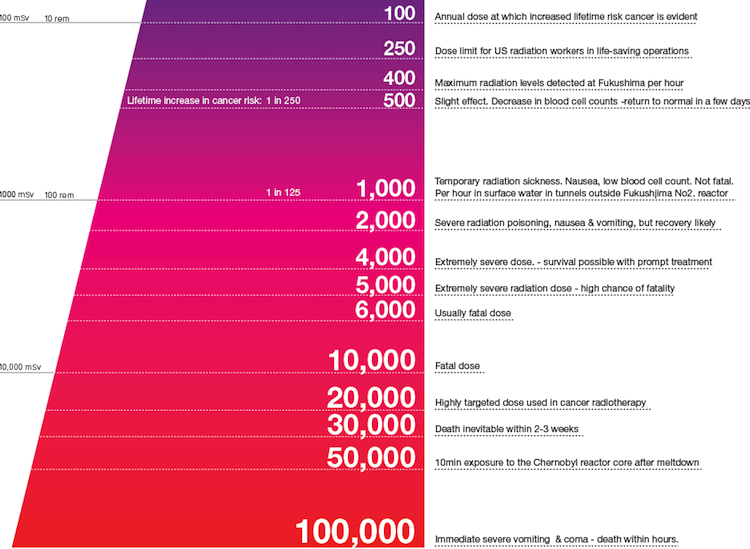
Infographic of the Day The Best Radiation Chart We’ve Seen So Far
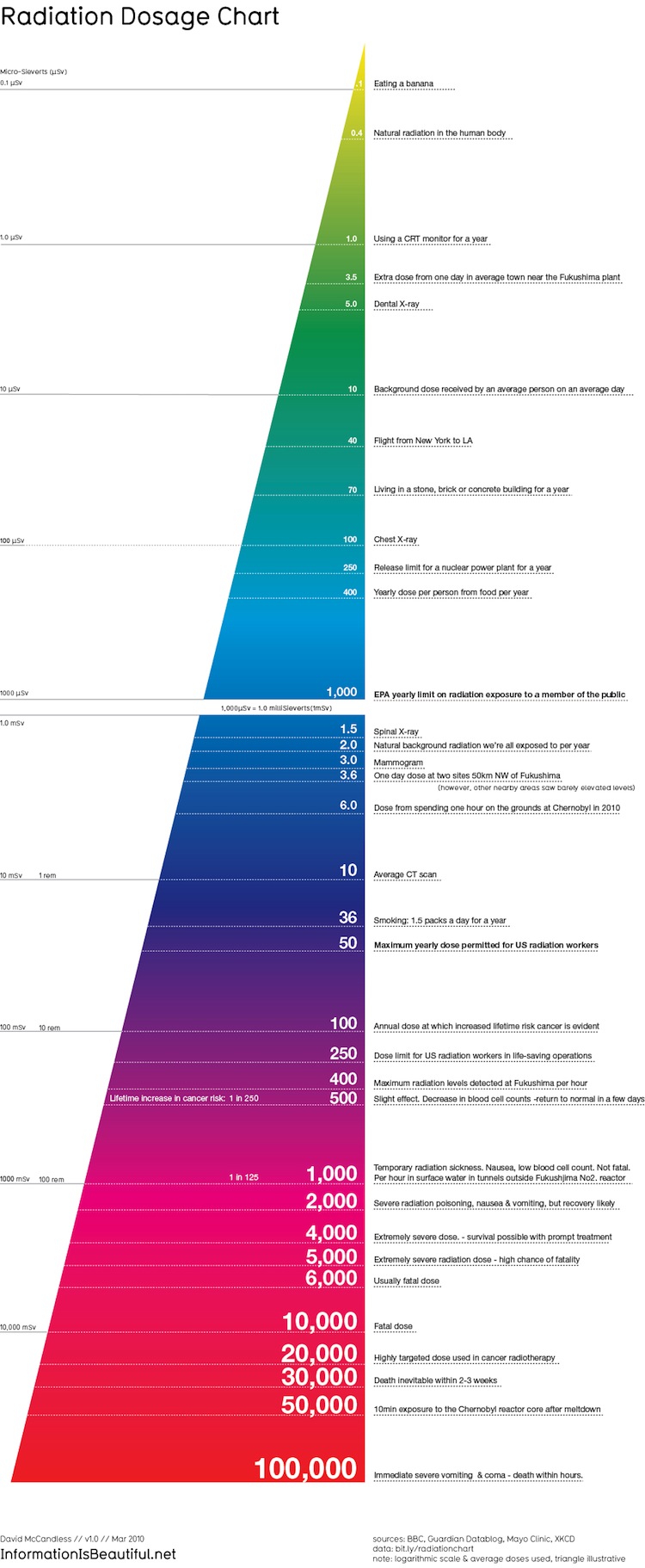
Infographic of the Day The Best Radiation Chart We’ve Seen So Far

Radioactive Safety Chart
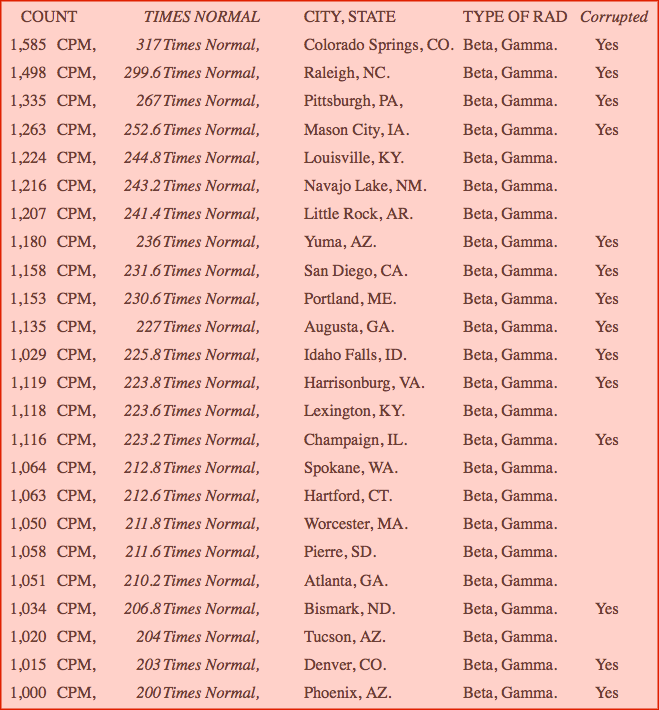
⚛ Your Radiation 61, June 1118, 2016 🌎 ⚛ ⚛ ⚛ Leuren Moret Global
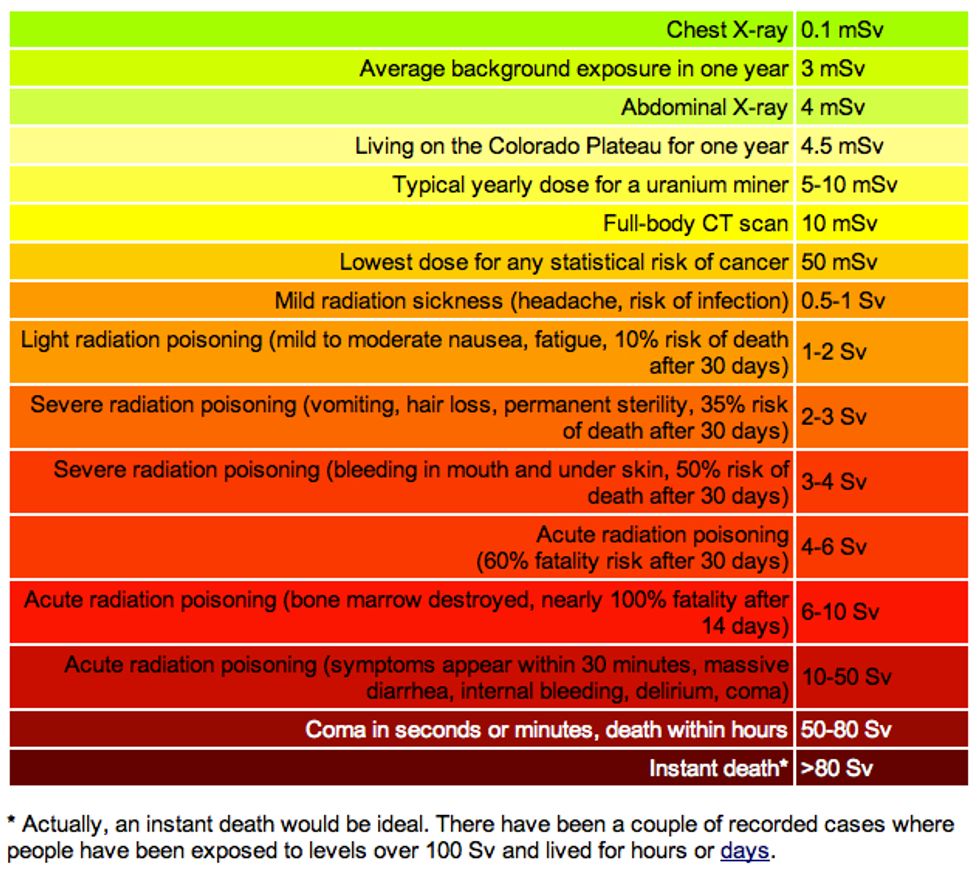
A Chart to Better Understand Radiation Levels and Their Effects on

Nuke Pro Waves of Radiation Passing Over USA

Radioactive Safety Chart

Nuke Pro Geiger Counter Interpretation Simplified

Nuke Pro Geiger Counter Interpretation Simplified
Web Counts Per Minute (Abbreviated To Cpm) Is A Measure Of The Detection Rate Of Ionization Events Per Minute.
1,200 Cpm On The Meter (For Cs137) Is About 1 Mr/Hr (Millirad Per Hour).
120 Cpm On The Meter (For Cs137) Is About 1 Usv/Hr (Microsievert Per Hour).
You Can See There There's A Lot Of Randomness In The Data.
Related Post: