
Engine Compression Test Chart
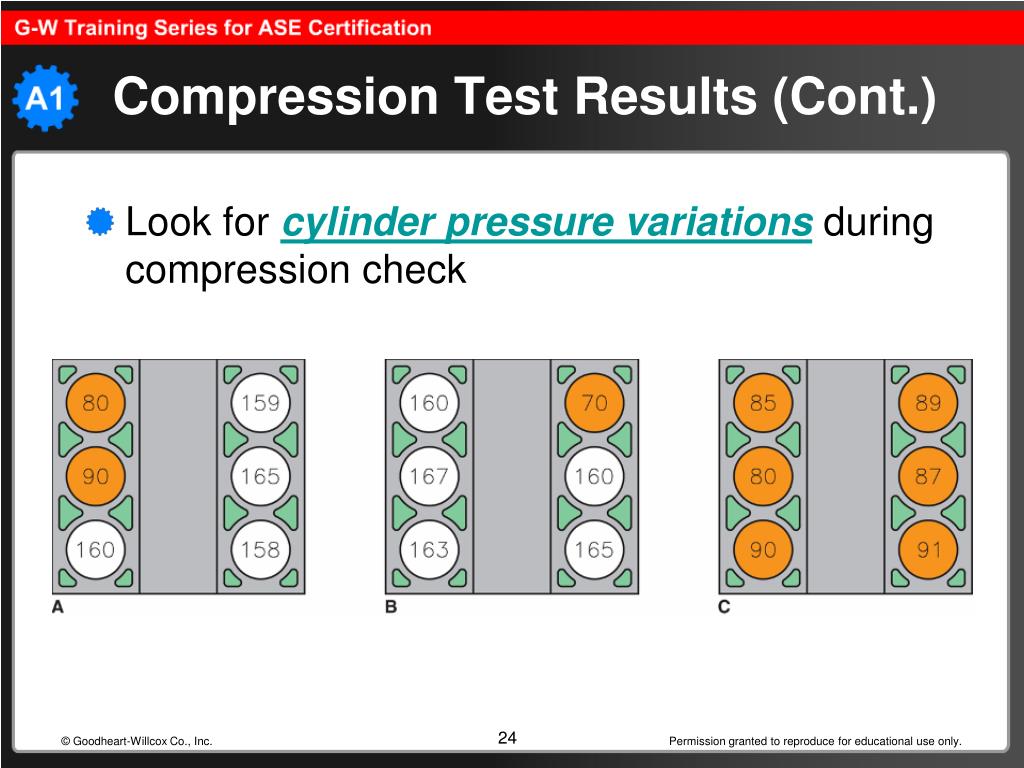
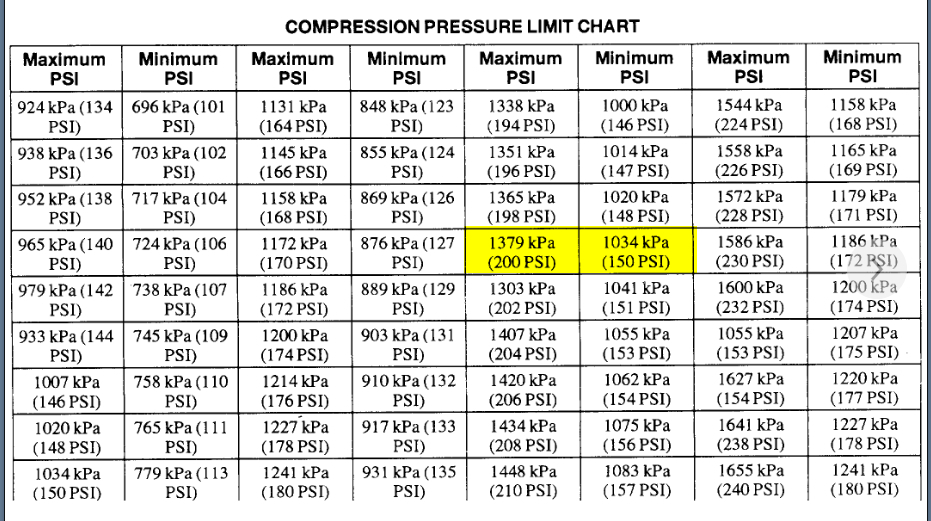
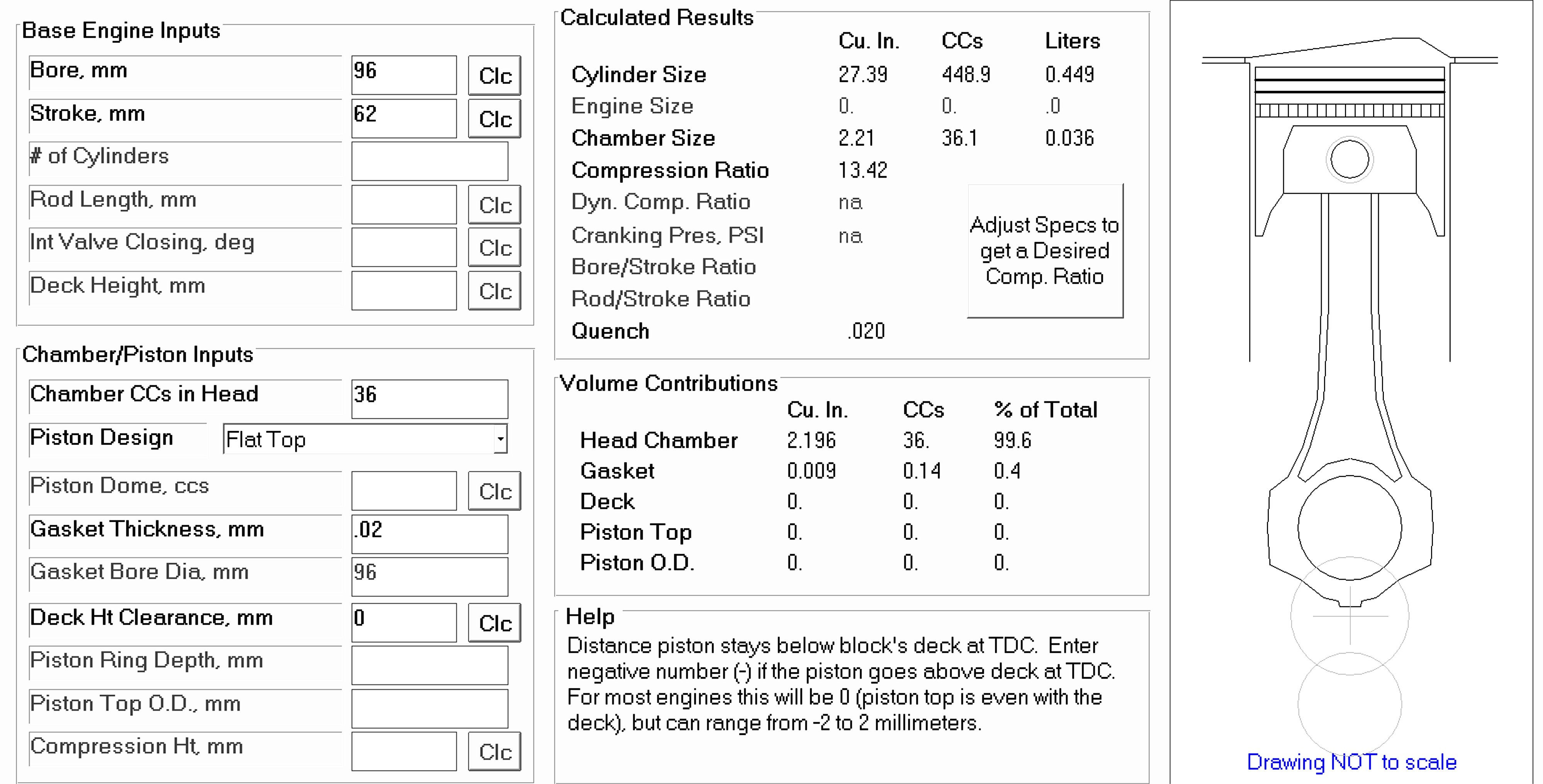
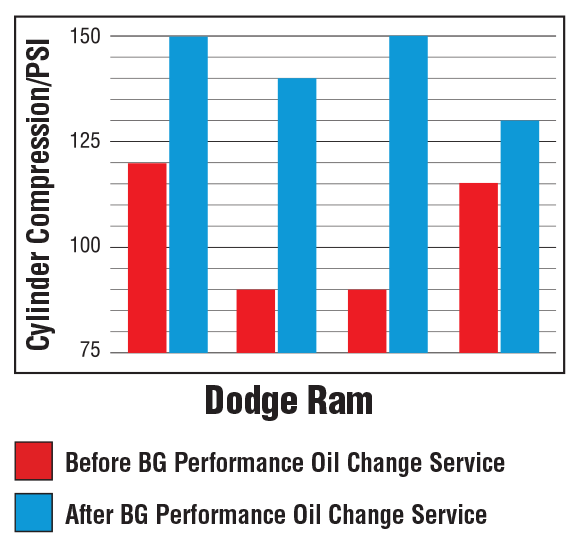
Engine Compression Test Chart - The test will help you locate potential internal problems affecting engine performance. Web below is a guide on how to do a compression test and interpret the results. You need a fully charged battery when carrying out the test to get an accurate reading. Most engines will have a compression ratio that exceeds 100 psi. Because, we will compare results, between cylinders to determine what it all means. Healthy engines should have compression. A leak down test result of 30 percent should not be a cause for alarm. Analysis of the current/voltage changes gives the comparative compression values of all cylinders. Web create a chart similar to this example to record your test readings. Cooley shows you how to do the king of all engine tests. Web by measuring the compression pressure generated within each cylinder, technicians can identify potential issues such as worn piston rings, leaking valves, or damaged cylinder walls, enabling them to address these problems promptly and restore optimal engine performance. No cylinder should have a pressure lower than 75% of the highest recorded value. Attach the gauge to each cylinder, ensuring a secure connection. Note the circular cylinders and the timing belt on the engine’s front. Low engine compression can cause a misfire code. Web the premise of a compression test is to test each cylinder to see in measured psi exactly how much compression that particular cylinder is producing. How to prepare for a compression test. Web to check your vehicle’s engine with a compression test, you need a compression gauge and safety gear. Analysis of the current/voltage changes gives the comparative compression values of all cylinders. You need a fully charged battery when carrying out the test to get an accurate reading. Because, we will compare results, between cylinders to determine what it all means. Step by step test instructions. Web regular engine misfires, reduced acceleration, and poor fuel economy are indicators that you need to conduct an engine compression test. Web a compression test is to determine how much pressure the engine makes, and a leakdown test measures its ability to. For example, consider a v6 with the following compression test results Look down on the engine to figure out which cylinder is closest to the front of the engine. Attach the gauge to each cylinder, ensuring a secure connection. Web learning how to check engine compression will give one the ability to check performance issues of your car and increase. Click here and try our compression calculator now! Crank the engine and note stable pressure levels. Because, we will compare results, between cylinders to determine what it all means. How to prepare for a compression test. Web the pressure of each cylinder should be measured and compared to the values for each of the remaining engine cylinders. Web how to do a compression test on your engine. Web how to do an engine compression test on 3.0l and 3.8l v6 equipped ford, mercury and lincoln. Analysis of the current/voltage changes gives the comparative compression values of all cylinders. Healthy engines should have compression. Low engine compression can cause a misfire code. Attach the gauge to each cylinder, ensuring a secure connection. No cylinder should have a pressure lower than 75% of the highest recorded value. Note the circular cylinders and the timing belt on the engine’s front. In this video, we show you how to do it and how to interpret the results. Web regular engine misfires, reduced acceleration, and poor. Low engine compression can cause a misfire code. For example, consider a v6 with the following compression test results Web the pressure of each cylinder should be measured and compared to the values for each of the remaining engine cylinders. Specifically, parts like intake and exhaust valves, valve seats, head gaskets, and the piston rings are common parts that can. Web learning how to check engine compression will give one the ability to check performance issues of your car and increase them if desired. Engine compression atmospheric pressure at. No cylinder should have a pressure lower than 75% of the highest recorded value. Web an engine compression test is the most practical way to learn about the mechanical condition of. Web below is a guide on how to do a compression test and interpret the results. Healthy engines should have compression. Web a compression test is a decent way to assess the sealing functions of an engine’s valves and valve seats, piston rings and cylinder head gaskets. In this video, we show you how to do it and how to. Remember that no engine is perfectly sealed. Crank the engine and note stable pressure levels. You need a fully charged battery when carrying out the test to get an accurate reading. Specifically, parts like intake and exhaust valves, valve seats, head gaskets, and the piston rings are common parts that can wear out and lead to. For example, consider a. No cylinder should have a pressure lower than 75% of the highest recorded value. Web to check your vehicle’s engine with a compression test, you need a compression gauge and safety gear. Crank the engine and note stable pressure levels. Because, we will compare results, between cylinders to determine what it all means. Healthy engines should have compression. Analysis of the current/voltage changes gives the comparative compression values of all cylinders. Cooley shows you how to do the king of all engine tests. Web how to do a compression test on your engine. Start with a cranking (static) compression test on a warm engine, to cancel out obvious problems, such as: Web testing engine compression provides a snapshot of the health of your engine. Click here and try our compression calculator now! Look down on the engine to figure out which cylinder is closest to the front of the engine. No cylinder should have a pressure lower than 75% of the highest recorded value. Most engines will have a compression ratio that exceeds 100 psi. How to prepare for a compression test. Engine compression atmospheric pressure at. Specifically, parts like intake and exhaust valves, valve seats, head gaskets, and the piston rings are common parts that can wear out and lead to. You need a fully charged battery when carrying out the test to get an accurate reading. Web narrow down on your goal compression ratio while being a quick and easy way to test different engine internal setups. In this video, we show you how to do it and how to interpret the results. Web below is a guide on how to do a compression test and interpret the results.
StepbyStep Guide to Do a Car Engine Compression Test

Engine Compression Test Chart
PPT Engine Problem Diagnosis and TuneUp PowerPoint Presentation
Engine Compression Test Chart

Engine Compression Test A Crucial Diagnostic Tool for Your Vehicle

Repair Guides Engine Mechanical Checking Engine Compression
Engine Compression Chart
Engine Compression Test Chart

Compression test procedure?
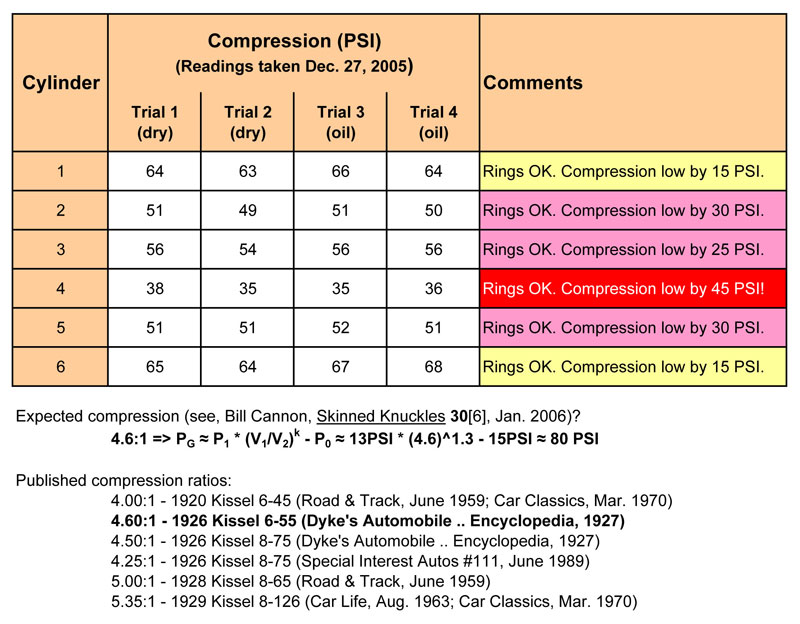
Engine Compression Test Chart
Note The Circular Cylinders And The Timing Belt On The Engine’s Front.
Step By Step Test Instructions.
Put The Compression Test Adapter Into The Engine's First Cylinder.
Web The Premise Of A Compression Test Is To Test Each Cylinder To See In Measured Psi Exactly How Much Compression That Particular Cylinder Is Producing.
Related Post: