
Control Chart Rules
Control Chart Rules - Used to monitor the mean (average) and range (variability) of a process. One point beyond control limits: They help pinpoint when and where defects are being introduced in the production process. Web the descriptions below provide an overview of the different types of control charts to help practitioners identify the best chart for any monitoring situation, followed by a description of the method for using control charts for analysis. Web this month’s publication examines 8 rules that you can use to help you interpret what your control chart is communicating to you. Web choose the appropriate control chart for your data. Determine the appropriate time period for collecting and plotting data. When one is identified, mark it on the chart and investigate the cause. Web control chart rules or guidelines are used to interpret control charts, helping to identify patterns that suggest a process is out of statistical control. Suitable for small sample sizes. Suitable for small sample sizes. One point beyond control limits: They help pinpoint when and where defects are being introduced in the production process. Web control chart rules or guidelines are used to interpret control charts, helping to identify patterns that suggest a process is out of statistical control. Web control charts effectively track defects and reduce rework costs by distinguishing normal process variation from abnormal defects. Web this month’s publication examines 8 rules that you can use to help you interpret what your control chart is communicating to you. When one is identified, mark it on the chart and investigate the cause. Collect data, construct your chart and analyze the data. Web the descriptions below provide an overview of the different types of control charts to help practitioners identify the best chart for any monitoring situation, followed by a description of the method for using control charts for analysis. Determine the appropriate time period for collecting and plotting data. Collect data, construct your chart and analyze the data. These rules help you identify when the variation on your control chart is no longer random, but forms a pattern that is described by one or more of these eight rules. Suitable for small sample sizes. Web the following rules can be used to properly interpret control charts: When one is. Suitable for small sample sizes. Collect data, construct your chart and analyze the data. Web choose the appropriate control chart for your data. When one is identified, mark it on the chart and investigate the cause. One point beyond control limits: Web the most common types are: Web choose the appropriate control chart for your data. One point beyond control limits: Here are some common control chart rules: Web this month’s publication examines 8 rules that you can use to help you interpret what your control chart is communicating to you. They help pinpoint when and where defects are being introduced in the production process. Web control charts effectively track defects and reduce rework costs by distinguishing normal process variation from abnormal defects. Web control chart rules or guidelines are used to interpret control charts, helping to identify patterns that suggest a process is out of statistical control. Here are some. One point beyond control limits: Determine the appropriate time period for collecting and plotting data. Web control chart rules or guidelines are used to interpret control charts, helping to identify patterns that suggest a process is out of statistical control. Web control charts effectively track defects and reduce rework costs by distinguishing normal process variation from abnormal defects. Web this. Used to monitor the mean (average) and range (variability) of a process. When one is identified, mark it on the chart and investigate the cause. These rules help you identify when the variation on your control chart is no longer random, but forms a pattern that is described by one or more of these eight rules. Web the following rules. Web control chart rules or guidelines are used to interpret control charts, helping to identify patterns that suggest a process is out of statistical control. Suitable for small sample sizes. Used to monitor the mean (average) and range (variability) of a process. Web this month’s publication examines 8 rules that you can use to help you interpret what your control. Web the following rules can be used to properly interpret control charts: Suitable for small sample sizes. Here are some common control chart rules: They help pinpoint when and where defects are being introduced in the production process. These rules help you identify when the variation on your control chart is no longer random, but forms a pattern that is. These rules help you identify when the variation on your control chart is no longer random, but forms a pattern that is described by one or more of these eight rules. Here are some common control chart rules: One point beyond control limits: Collect data, construct your chart and analyze the data. Web the descriptions below provide an overview of. Used to monitor the mean (average) and range (variability) of a process. Web the descriptions below provide an overview of the different types of control charts to help practitioners identify the best chart for any monitoring situation, followed by a description of the method for using control charts for analysis. When one is identified, mark it on the chart and. Suitable for small sample sizes. Collect data, construct your chart and analyze the data. Web control chart rules or guidelines are used to interpret control charts, helping to identify patterns that suggest a process is out of statistical control. Used to monitor the mean (average) and range (variability) of a process. Web control charts effectively track defects and reduce rework costs by distinguishing normal process variation from abnormal defects. Here are some common control chart rules: Determine the appropriate time period for collecting and plotting data. When one is identified, mark it on the chart and investigate the cause. Web this month’s publication examines 8 rules that you can use to help you interpret what your control chart is communicating to you. Web the following rules can be used to properly interpret control charts: One point beyond control limits: These rules help you identify when the variation on your control chart is no longer random, but forms a pattern that is described by one or more of these eight rules.
Control Chart A Key Tool for Ensuring Quality and Minimizing Variation
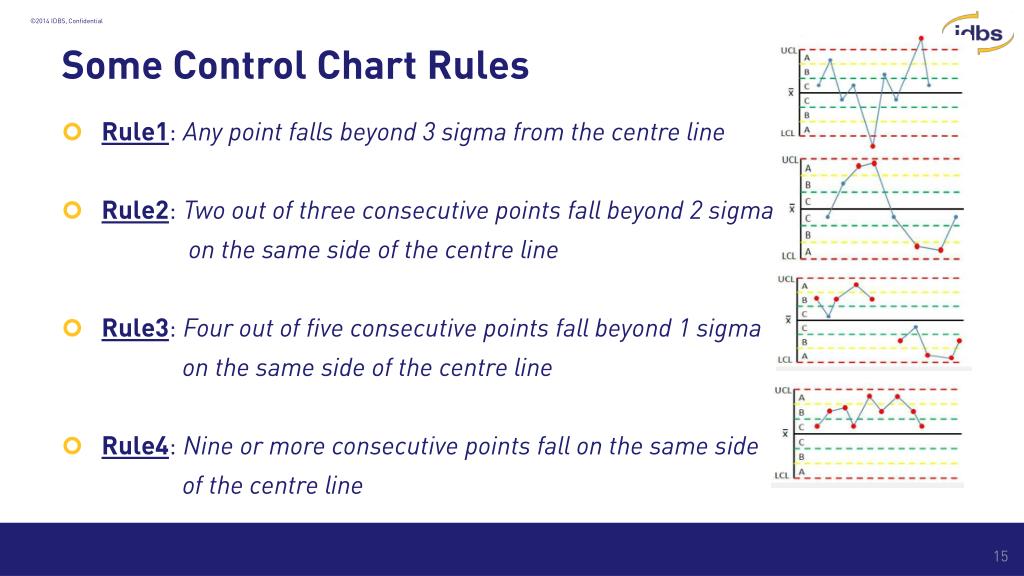
PPT Statistical Process Control PowerPoint Presentation
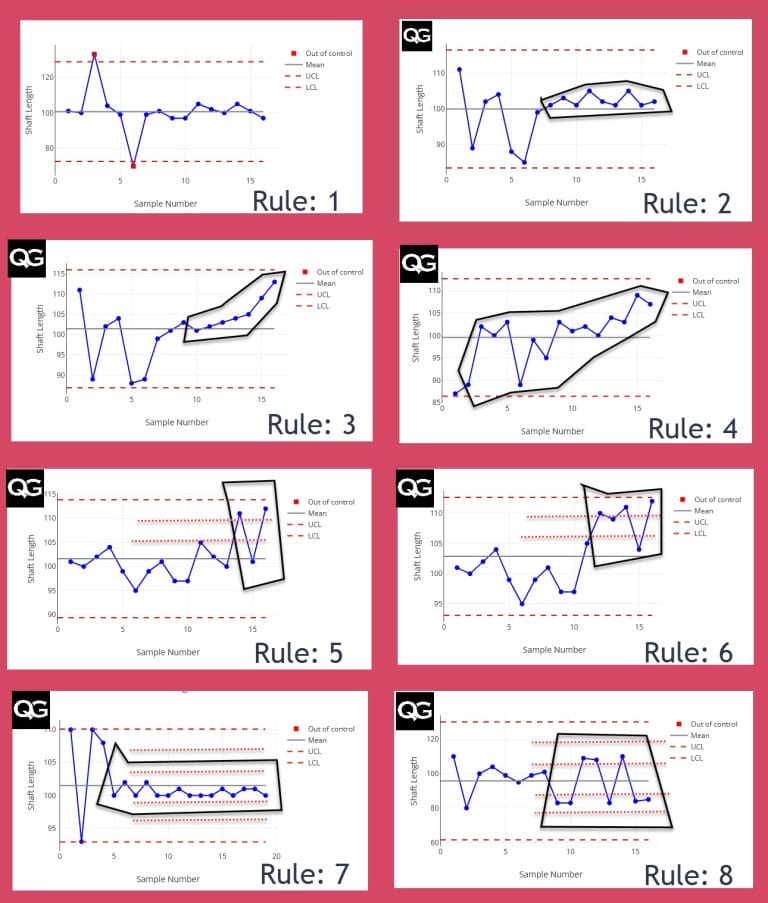
Nelson Rules (and Western Electric Rules) for Control Charts Quality
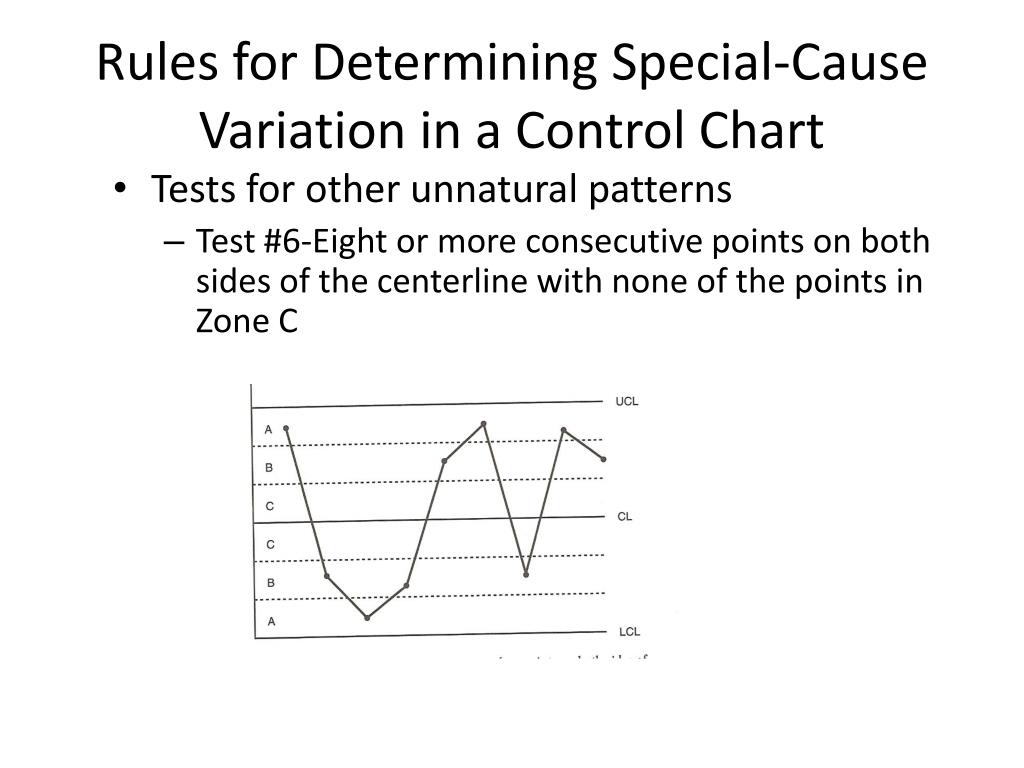
PPT Control Charts PowerPoint Presentation, free download ID6783091

Control Chart The Eight Rules YouTube

Control Chart Analysis Nelson Rules YouTube

8 rules of spc, 8 rules of control chart, SPC, 8 rules of statistical

SPC Control Charting Rules YouTube
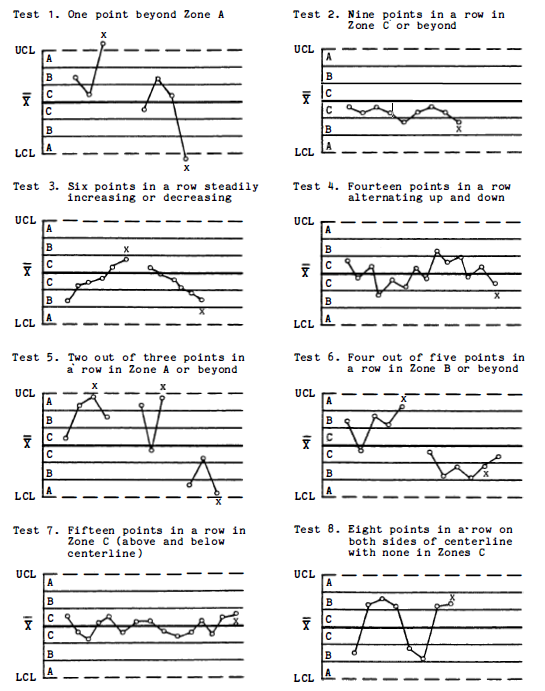
Using the Nelson Rules for Control Charts in Minitab

Nelson's 8 rules for Control Charts Control Chart Manufacturing
They Help Pinpoint When And Where Defects Are Being Introduced In The Production Process.
Web Choose The Appropriate Control Chart For Your Data.
Web The Descriptions Below Provide An Overview Of The Different Types Of Control Charts To Help Practitioners Identify The Best Chart For Any Monitoring Situation, Followed By A Description Of The Method For Using Control Charts For Analysis.
Web The Most Common Types Are:
Related Post: